
The Island Economy
Imagine a tiny island in the middle of an ocean. On this island there are just two inhabitants: Alan (A) and Bob (B). Initially, they are completely self-sufficient. Each has a house, solar panels for energy, a well for water, and gardens for food. At this point there is no trade, so the island’s GDP is zero.
[1] Alan decides to open a small two-seater cinema. He charges Bob £5 per ticket. If Bob goes once a week, annual GDP is about £260.
[2] Alan then raises the price to £50. At this rate, Bob will likely stop going, and GDP falls back to zero. Alan shuts down his cinema.
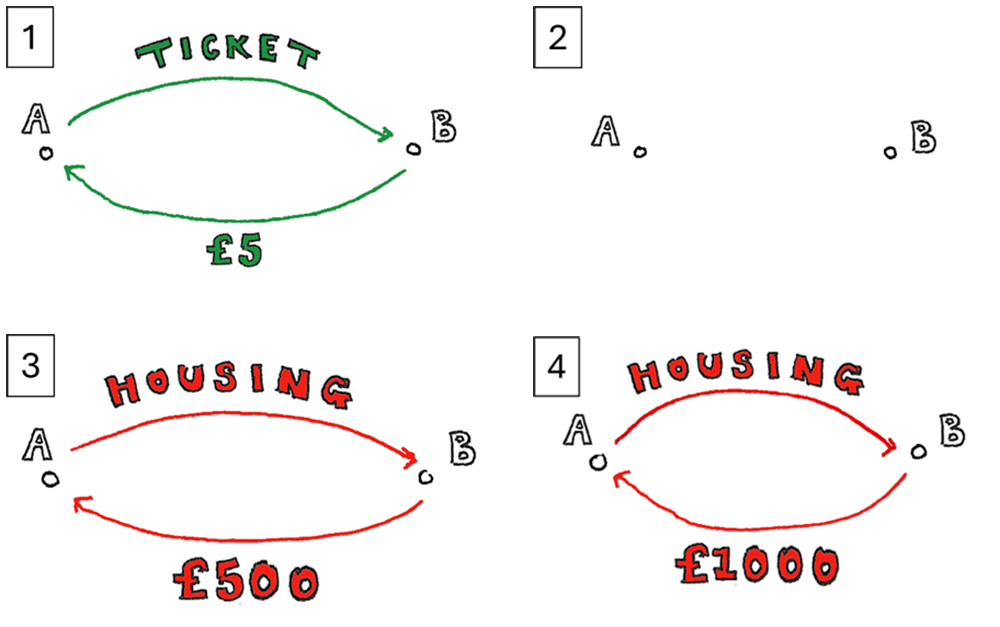
[3] Next, Alan acquires Bob’s house and becomes his landlord. He charges £500 rent per month. GDP rises to £6,000 per year.
[4] Alan doubles the rent to £1,000. Bob has no choice but to pay. GDP jumps to £12,000 per year. But Bob is now worse off, even though GDP has doubled.
This story shows why GDP can be misleading. Cinema tickets are non-essential – Bob can stop buying them. Housing is essential – Bob cannot simply stop paying rent. Essentials like housing, food, water, and medicine are very different from non-essentials.
Essential vs Non-Essential Resources
Essential expenditure for individuals is anything which:
- Maintains health
- Maintains income
- Is legally mandatory
Non-essential resources are those we can freely choose to stop consuming without harming health or income.
Introducing Two Core Metrics
GDP is often used as an indicator of wellbeing, but rising essential costs can distort it. To avoid this distortion, we can remove essentials from GDP calculations. This leads to a new metric: Non-Essential GDP (NEGDP).
NEGDP tells us the value of non-essential spending in an economy. In other words, it asks: “How much of our economy is about living, not just surviving?”
- NEGDP is a macroeconomic metric because it looks at the economy as a whole.
But we also need a microeconomic metric to measure whether families and individuals can afford essentials. That’s where the Walden Quotient (WQ) comes in.
WQ = Gross Income ÷ Cost of Essentials
- If WQ > 1 → basic needs are met
- If WQ < 1 → income does not cover essentials, and support is needed
A higher WQ means breathing room: the ability to save, retrain, or walk away from bad jobs. That’s why WQ can also be seen as the “Walkaway Quotient” – a measure of economic freedom.
Rethinking Government Goals
ACE suggests shifting government goals away from GDP growth and towards two new objectives:
- Primary objective: ensure WQ > 1 for all
- Secondary (non-critical) objective: maximise NEGDP
Safety Nets & Escape Routes
These objectives can be achieved through two types of policy:
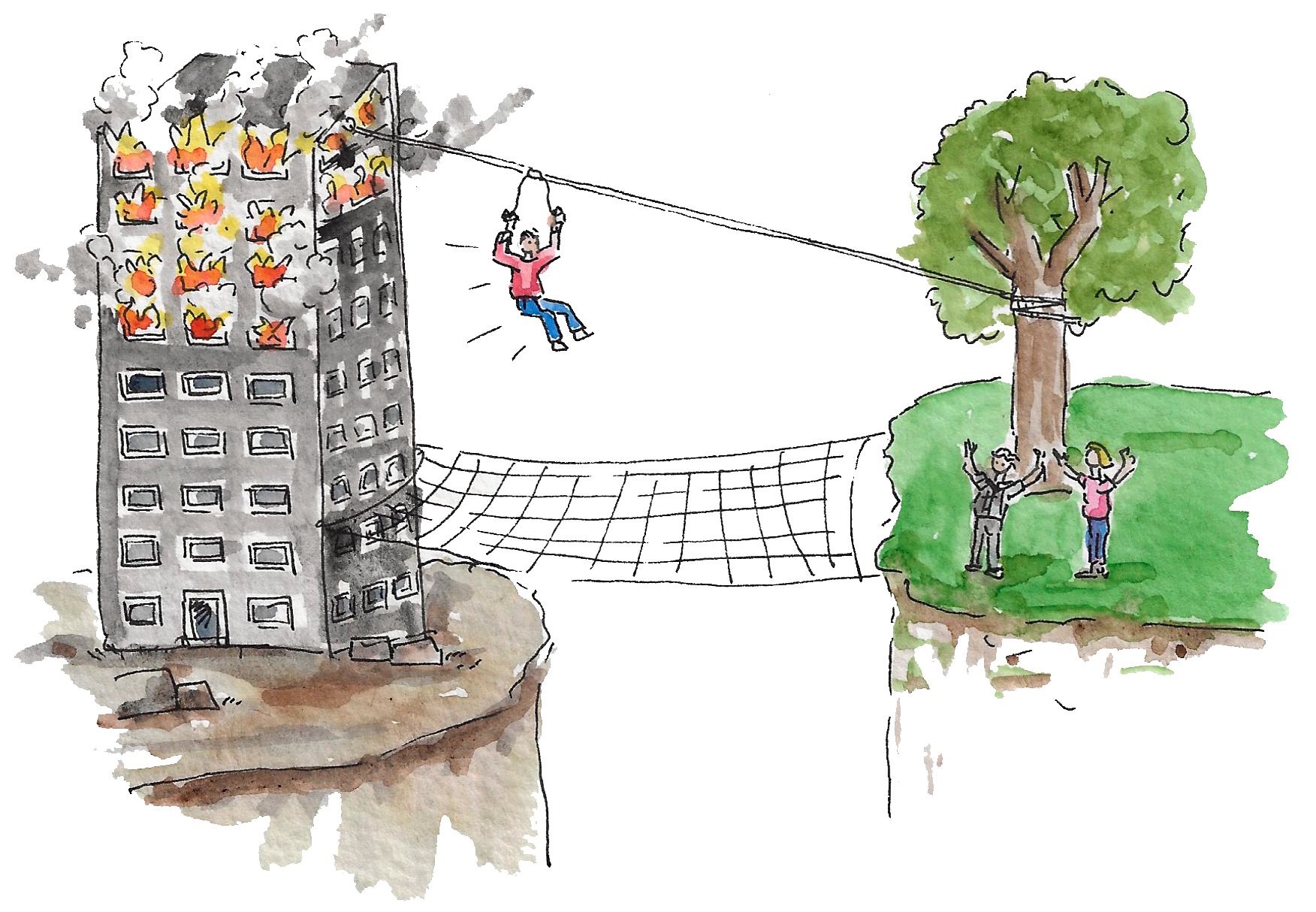
- Safety Net Policies: reduce the cost of essentials.
- Escape Route Policies: help people transition to more meaningful work.
Details of specific policies will be added soon.
Why Autonomy Matters
Meaningful work improves mental health, which also improves productivity. If people are free to walk away, bad employers are pressured to improve.
When citizens are truly free to choose where they work and what they consume, every decision they make helps shape society. Voting becomes a continuous process, not just something that happens in a polling booth every few years.

Summary of ACE Benefits
Resilient to Crises
Pandemics, natural disasters, tariffs, shocks – ACE cushions people by reducing dependence on fragile systems.
Adaptable to the Future
With escape route policies and strong WQ, people can retrain and thrive as AI and automation reshape industries.
Strengthens Democracy
By removing coercion, people can truly “vote with their feet and wallets” – walking away from bad employers, products, and systems.
Economic Stability
Cuts state costs and boosts tax revenues through healthier, freer productivity.
Human-Centred Prosperity
Puts quality of life – freedom to walk away, meaningful work, secure essentials – above raw GDP figures.